Spring 2026 Awards

The Board of Directors of the James P. Geiss & Margaret Y. Hsu Foundation is delighted to announce awards made during the spring application cycle:
PROJECTS

Exhibitions

China Institute of AmericaCelebrating Sixty Years of China Institute Gallery: 1966-2026

Founded in 1966, the China Institute Gallery has presented the history of Chinese art from antiquity to the present through superb and thought-provoking exhibitions. The masterworks featured in Celebrating Sixty Years of China Institute Gallery: 1966-2026 exemplify what has made the Institute’s exhibitions groundbreaking. From presentations of exquisite jades and bronze vessels, to the symbolism of old trees, to Chinese ceramics, calligraphy, and architecture—China Institute’s displays have consistently illuminated pathways to a deeper understanding of the culture of China.

Corning Museum of Glass | Ablaze: 500 Years of Chinese Glass

Opening in May 2027, the exhibition synthesizes current research on Ming and Qing dynasty glass and explores the transformative period when Chinese glassmakers transitioned from serving local markets to the splendor of court patronage under Qing emperors. They mastered transparency to produce vessels and scientific instruments, experimented with colorants and opacifiers to create bold new colors and emulate other materials, and merged their expertise with that of Europeans, creating an art form of their own. The exhibition will feature a wide range of approximately 180 glass objects created from the fourteenth to the mid-twentieth century, with key loans from institutions in the U.S., Canada, and China.

Journal Issue

CHINOPERL | Emotion, Entertainment, and History in Chinese Drama and Song | PI: Jing Shen, Eckerd College and Editor of CHINOPERL

This special issue of CHINOPERL: Journal of Chinese Oral and Performing Literature presents innovative and substantive studies of Ming drama, its adaptations, and early song suites related to Ming urban culture. Grounded in solid research and situated within their cultural and historical contexts, the contributions revolve around the theme of “Emotion, Entertainment, and History in Chinese Drama and Song.” Written by recent doctoral graduates and Ph.D. candidates, the research articles demonstrate innovative scholarship on complex subjects and bring fresh perspectives to the fields.

Open Access Publishing

University of Washington PressUWP / GHF Open Access Books: Four Story Collections, Phase II  | PI: Beth Fuget, University of Washington Press

in 2021, an award from GHF launched an open access collection of books published by the University of Washington Press on the Ming dynasty and adjacent periods and territories. The initial award funded ten books, and subsequent funding from GHF brought the total number of books in the collection to 25. The two newest awards add some of the Press’s most significant and most often used books in Ming studies to the collection: Feng Menglong’s Sanyan collections Stories Old and New, Stories to Caution the World, andStories to Awaken the World, translated and introduced by Shuhui Yang and Yunqin Yang; and Ling Menchu’sSlapping the Table in Amazement, translated by the Yangs and introduced by Robert Hegel.

Workshop

Washington University in St. LouisWorkshop to Prepare for the Book “Oxford Handbook of Early Modern Chinese History” | PIs: Steven B. Miles, Washington University in St. Louis and Editor-in-chief, Late Imperial China; Yulian Wu, Michigan State University

The award from GHF supports a workshop dedicated to the writing and discussion of the Oxford Handbook of Early Modern Chinese History, which is under contract with Oxford University Press. The Oxford Handbook is intended as an indispensable resource for the study of China’s last two imperial dynasties, the Ming and Qing. It seeks to deepen and reframe our understanding of Ming-Qing history by integrating new scholarship, addressing longstanding gaps, and reflecting the field’s evolving priorities over the past three decades. In doing so, the Oxford Handbook highlights how recent historiographical developments have fundamentally reshaped interpretations of the Ming and Qing.

PUBLICATIONS

Subventions

Columbia University Press | The Book of China: A Persian Merchant’s Description of the Ming State for the Ottoman Court by Ali Akbar Khatayi, edited and translated by Kaveh Hemmat, John Curry, Hyunhee Park

The Book of China is the most substantial description of East Asia in any west Eurasian language before the era of European maritime empires. Written in 1516 in the Ottoman capital, Istanbul, by Ali Akbar Khatayi, a merchant and professional cultural broker who had visited Beijing around 1506, The Book of China offers a view from the civically-entangled space of China’s Inner Asian frontier, a rare record of how merchants of the medieval Silk Road and Central Asian Muslims perceived Chinese culture at this pivotal moment. This volume includes a translation of the original Persian text and of the preface added by the Ottoman translator who gave it the title “Lawbook of China and Cathay,” annotations based on Classical Chinese, Persian, and Ottoman sources, and a critical introduction. 

University of British Columbia Press | Logics of a Great State: Chinese Statecraft from Early Ming to Xi Jinping, edited by Timothy Cheek, Bruce Rusk, and Shoufu Yin

This collection makes the Ming the starting point for a wide-ranging analysis of statecraft ideas and practices in early modern and modern China. It emerged from a GHF-sponsored conference held at the University of British Columbia and features thirteen papers that link Ming or Ming-adjacent themes to modern and contemporary governance issues. Overall, the volume enables scholars and a broader audience to rethink the Ming through the lens of its pivotal role in shaping Chinese governance, and to reconsider statecraft through extensive engagement with Ming history.

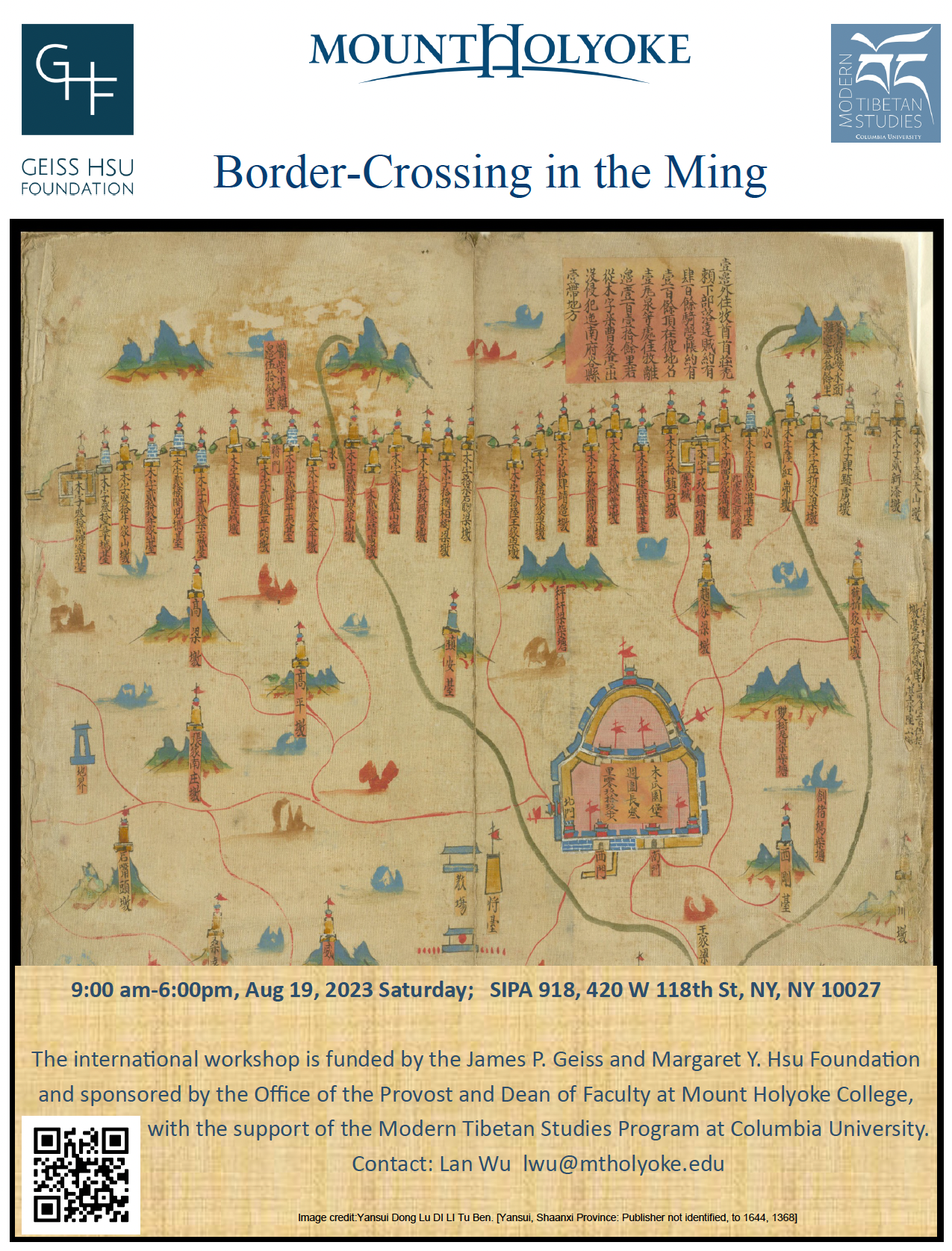
University of Hawai’i Press | Mapping the Ming World: Globalizing a Seventeenth-Century Vision of China by Mario Cams

Mapping the Ming World examines how seventeenth-century China reconceptualized its place in a rapidly transforming global order. At the center of the book is a striking and historically consequential map printed in 1644, immediately following the fall of Beijing and the death of the last Ming emperor. This extraordinary artifact places a diagram of the Chinese state at its core, surrounded by visual elements drawn from Renaissance-style world maps. The result is a bold fusion of spatial traditions that reshaped geographic thinking across East Asia while profoundly shaping European understandings of China for generations. By using a single map as a point of entry into broader questions of identity, empire, and world order, Mapping the Ming World offers a fresh and compelling contribution to the global history of cartography.

University of Washington Press | Boundaries and Bodhisattvas: Women, Lay Buddhism, and Religious Spaces in Late Imperial China by Xu Ma

From the sixteenth to early nineteenth centuries, Neo-Confucian ideology sought to reinforce the seclusion of women within the domestic sphere, while flourishing lay Buddhism increasingly fueled their passion for visiting temples and going on distant pilgrimages. Xu Ma explores this cultural tension to reveal how religious spaces—physical, imagined, and embodied—emerged as a “third social space” that both sustained and subverted the Confucian binaries of inside and outside, public and private. By blending gender studies, spatial theory, and literary analysis, Boundaries and Bodhisattvas demonstrates how women’s bodies and hearts reconfigured both Confucian gender paradigms and the broader religious landscape of late imperial China. 

University of Washington Press | The Tin Centuries: Technology and Statecraft in Qing China by Yijun Wang

Tin was everywhere in early modern China—lining tea chests, shaping religious vessels, alloyed into coins. Yet beneath this ordinary metal lies a story of migration, technology, and governance that paved the way for China’s entry into global capitalism. The Tin Centuries uncovers how tin connected miners in Yunnan and Southeast Asia, entrepreneurs and traders across oceans, and Qing officials confronting unprecedented demands on natural resources. By following tin’s movement from mountains and islands to imperial mintage and treasuries, The Tin Centuries reframes the history of technology, migration, and empire. It reveals how a seemingly humble metal reflected the changing trajectory of Qing statecraft and foreshadowed China’s path toward modernity within an expanding global economy.

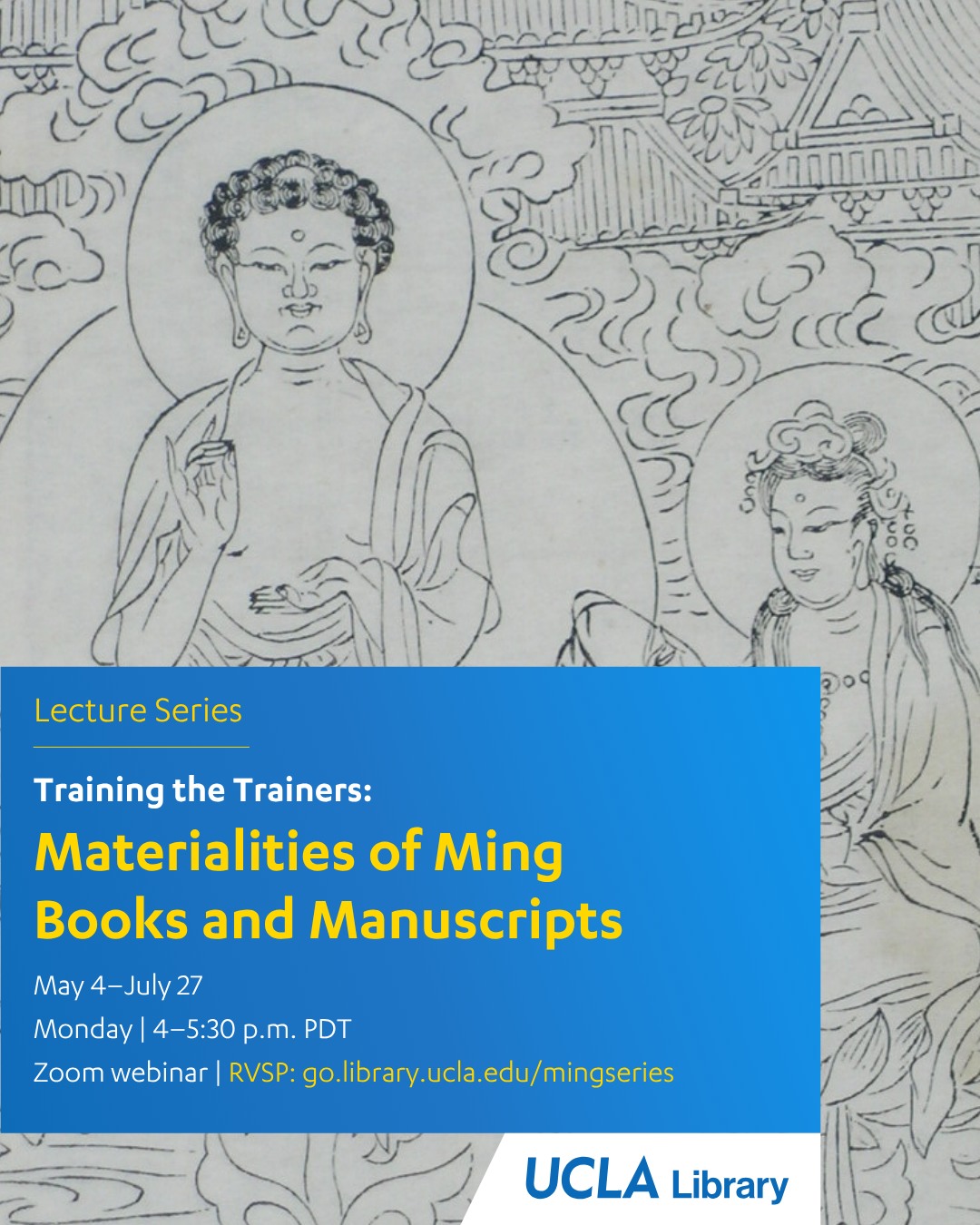
Training the Trainers: Materiality of Ming Books and Manuscripts

An introduction to the history and material culture of Ming books and manuscripts

May 4, 2026 – July 27, 2026 | 4 – 5:30 p.m. PDT

Presented by UCLA Library, The Claremont Colleges Library and Columbia University Libraries. This project was made possible in part by an award from the James P. Geiss and Margaret Y. Hsu Foundation.

The Materiality of Ming Books and Manuscripts lecture series brings together 13 scholars from North America and China to explore the history and material culture of Ming books and manuscripts. Speakers will present both foundational and recent research, offering essential context for a broad audience, including librarians seeking to build expertise in primary source materials and Object-Based Learning (OBL) instruction.

The series is designed to enhance awareness, strengthen professional competencies and deepen understanding of East Asian cultural heritage. Online sessions will introduce Ming books and manuscripts, while a future in-person residency will offer hands-on engagement with primary sources for selected participants. 

Programs will be delivered in either English or Chinese with live, simultaneous English translation.

Click for more information and to register.

LECTURES

May 4: From the Social History of Books to the Social Life of Things: An Overview of Developments in the China Field

May 11: Production, Publication and Organizational Framework of Ming Dynasty Buddhist Texts *

May 18: Compilation, Production, Publication and Structural Framework of Ming Dynasty Local Gazetteers (difangzhi) *

May 25: The Textual Construction of Genealogies in the Ming Dynasty

June 1: The Transformation and Transregional Spread of the Ming Buddhist Tripitaka *

June 8: An Era of Splendor: the Color Woodblock Prints and the Art of Classical Flower Manuals in the Ming *

June 15: The Compilation and Publication of Ming Dynasty Local Gazetteers Viewed Through Their Material and Structural Elements

June 22: Distribution and Characteristics of Fine Ming Dynasty Editions Held in North American Collections

June 29: Movable-type Printing Activities in the Ming Dynasty and Publications Produced Using Movable Type *

July 6: Configuring Ming-period Buddhist Texts and Images: Continuities and Changes

July 13: Ming Material Culture: The Example of Ming Books

July 20: Research on and Authentication of Fine Editions from the Ming Dynasty *

July 27: Buddhist and Daoist Illustrated Prints in the Ming Dynasty

* Program delivered in Chinese with simultaneous English translation

New Open-Access Story Collections

Two major Ming dynasty story collections, Stories Old and New by Feng Menglong and Slapping the Table in Amazement by Ling Menchu, translated by Shuhui Yang and Yunqin Yang, are now openly available thanks to support from GHF!

The lively stories in these collections present a broad picture of traditional Chinese society, full of characters from all levels of society. Perfect for courses and readers everywhere!

Visit the UW Press / Geiss Hsu Foundation Open Access Books Collection to find these and more than twenty other freely available titles to use in your teaching and research.

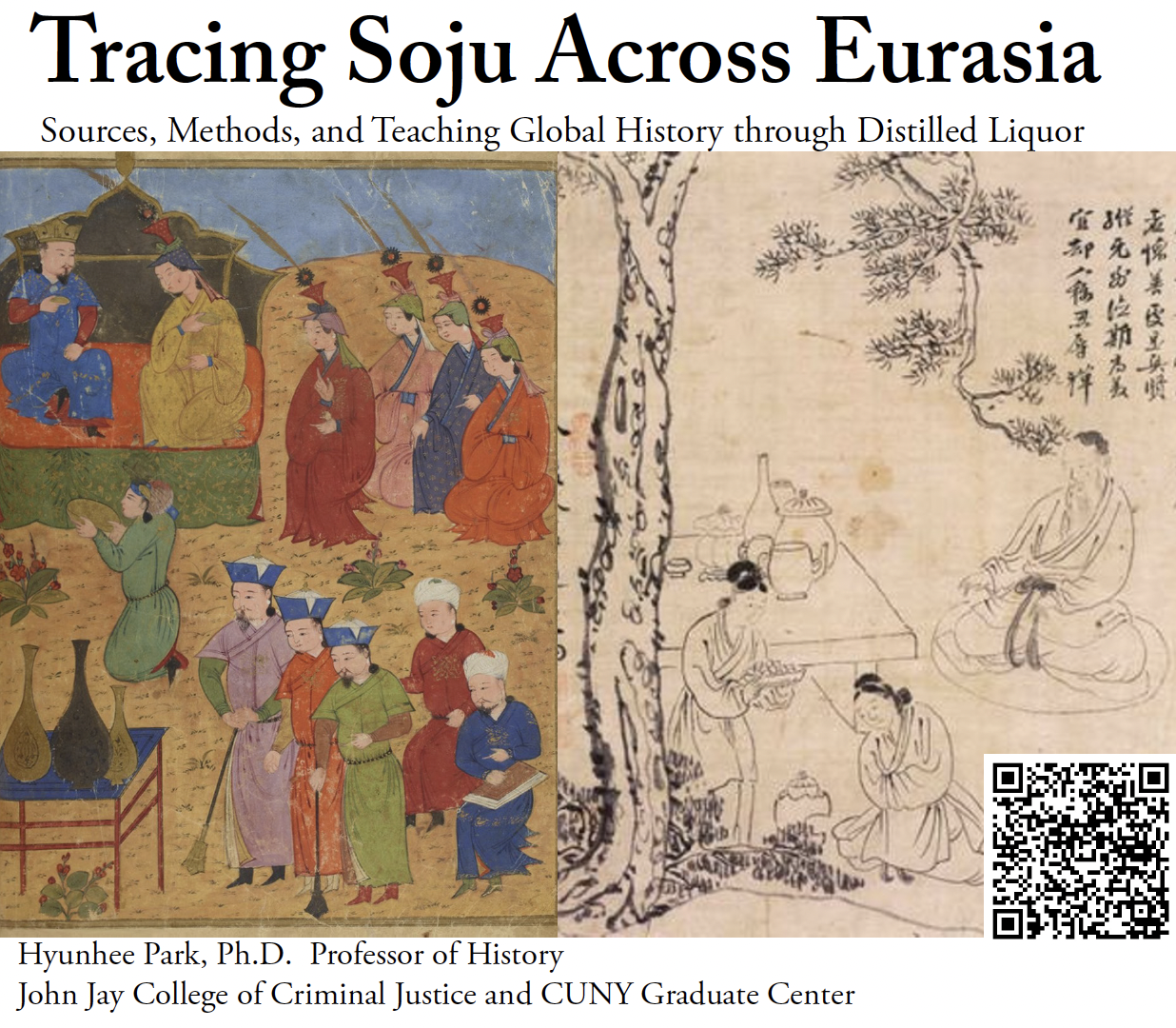
Tracing Soju Across Eurasia

Sources, Methods, and Teaching Global History through Distilled Liquor

A talk by Professor Hyunhee Park, John Jay College of Criminal Justice and the CUNY Graduate Center

This talk explores the global history of soju, Korea’s traditional distilled liquor, and argues that the Mongol Empire played a crucial role in accelerating the diffusion of distilled liquors across Eurasia. The transfer of distilled spirits to Koryŏ Korea represents one of the clearest documented cases of technological transmission, illustrating Korea’s integration into Mongol-era exchange systems and broader processes of cultural and technological exchange.

March 20, 2026, 10:40 am – 12:05 pm ET, St. John’s University, University Center Suite D, and on Teams: https://teams.microsoft.com/meet/22160925119374?p=e0vcjkYe73QUl411Pa

Sponsored by the Geiss Hsu Foundation, the St. John’s University Institute for Asian Studies, and the Department of History

Spring Funding Opportunities

Do you have a Ming-related or adjacent project or publication in the works? Apply for our next round of funding!

GHF has previously supported:

  • Scholarships and travel grants for academic courses and events
  • Print and/or open-access books and translations
  • K-12 programs and teacher development
  • Digital and crowdsourced research tools 
  • Museum exhibitions and public programs
  • Scholarly workshops and conferences
  • Musical performances
  • And more!

We consider applications for projects that confirm our mission and meet our guidelinesQuestions? Contact info@geissfoundation.us.

Submit your application by March 1, 2026.

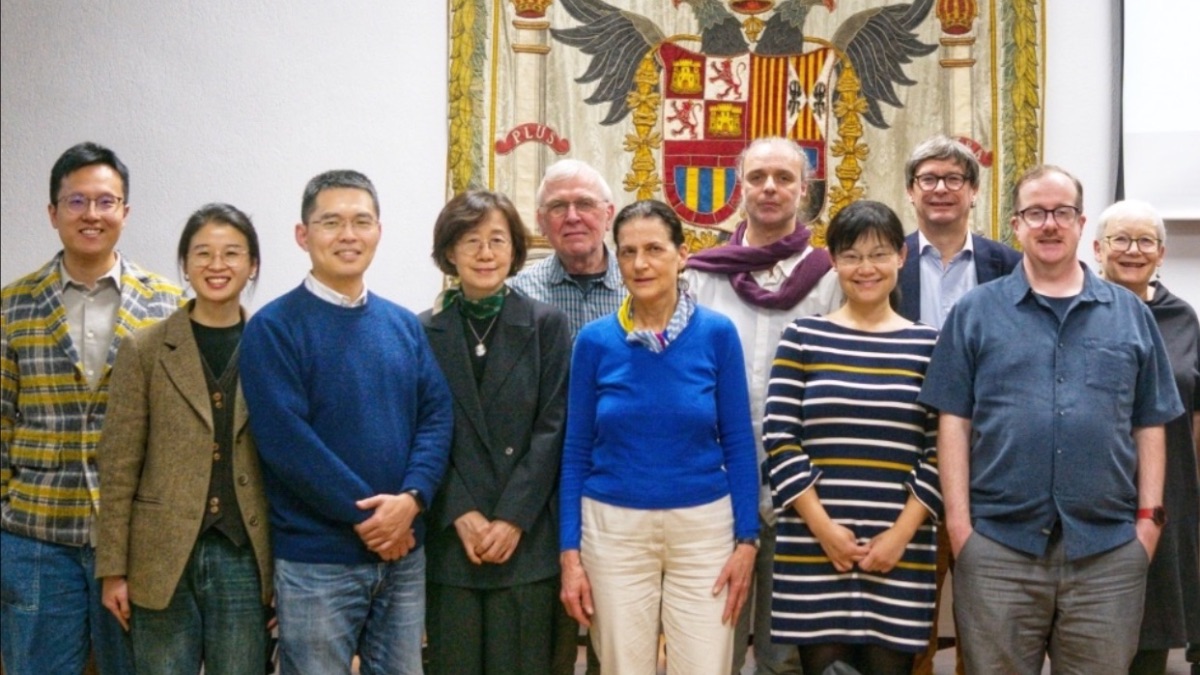
Image: Participants at a GHF-funded workshop on the history and landscape culture of West Lake at the University of Granada.

Geiss Hsu Book Prizes in Ming Studies

With the generous support of the James P. Geiss and Margaret Y. Hsu Foundation, the Society for Ming Studies (SMS) has established two book prizes: Best First Book and Best Overall Book. These prizes recognize outstanding English-language monographs on Ming China (1368–1644) and its global connections.

A committee of senior Ming specialists from diverse disciplines evaluates eligible publications from recent years and generally awards one prize in each category every year or every other year. The prizes include a cash award and are presented at the SMS annual meetings, held in conjunction with the Association for Asian Studies annual conference.

Nomination Guidelines

Nominations for the 2026 cycle are now closed. Monographs in English published in 2025 or later will be eligible for future rounds. Nominations are welcome but books that have not been nominated may also be considered. Scholars, publishers, and authors may submit eligible titles.

To nominate a book, please email the following information to Guojun Wang (guojun.wang@mcgill.ca), president of the SMS:

  • Book title and author(s)
  • Publisher and publication date
  • Publisher contact information
  • Brief author biography (institutional affiliation, title, research areas, etc.)
  • Indication of whether the book is the author’s first monograph

For the 2027 cycle, nominations must be received by May 30, 2026.

2026 Prize Committee

  • Anne Gerritsen (University of Warwick)
  • Yuhang Li (University of Wisconsin–Madison)
  • Keith McMahon (University of Kansas)
  • David Robinson (Colgate University)

Past Awards

2025 Award

BEST OVERALL BOOK

  • Keith McMahon, “Saying All That Can Be Said: The Art of Describing Sex in Jin Ping Mei” (Harvard University Asia Center, 2023)

2024 Awards

BEST FIRST BOOK

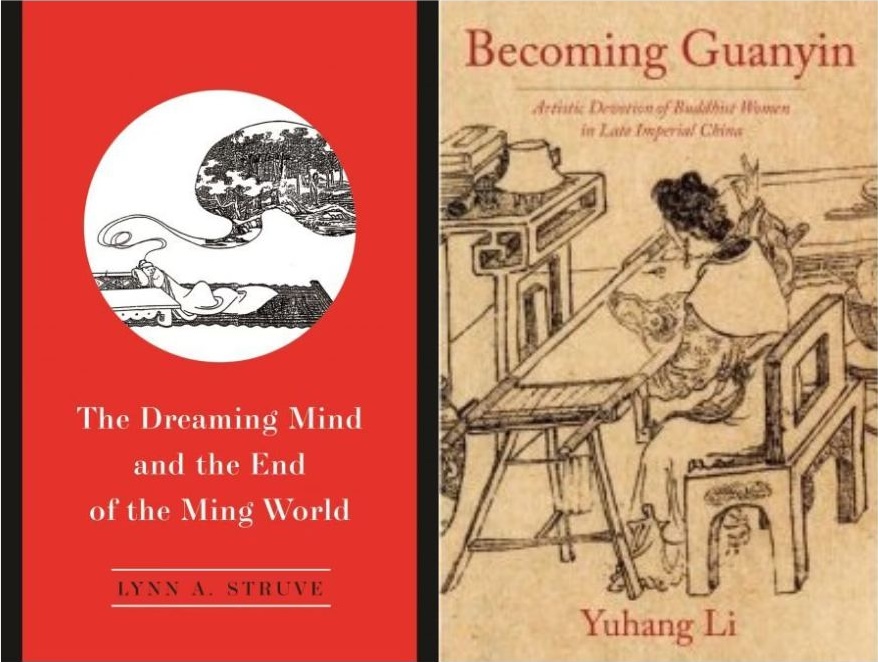
  • Yuhang Li, “Becoming Guanyin: Artistic Devotion of Buddhist Women in Late Imperial China” (Columbia University Press, 2020)

BEST OVERALL BOOK

  • Lynn Struve, “The Dreaming Mind and the End of the Ming World” (University of Hawai‘i Press, 2019)

Travel Grants for Ming Studies Scholars Attending AAS 2026

The James P. Geiss and Margaret Y. Hsu Foundation has awarded the Association for Asian Studies $20,000 to fund participation for Ming Studies scholars at the AAS 2026 Annual Conference in Vancouver, Canada.

The James P. Geiss and Margaret Y. Hsu Foundation is a 501(c)(3) private, not-for-profit foundation which encourages and sponsors scholarly research and interpretation of the Ming Dynasty (1368–1644) in China. The Geiss Hsu Foundation supports studies of the predecessors and successors of the Ming, as well as contemporaries in geographic areas with which the Ming interacted.

The Geiss Hsu Annual Conference Travel Grant will award up to $2,000 each in travel support to scholars specializing in studies of Ming China, as well as scholars who engage in research related to the Ming. Applicants do not need to be a part of an organized session to receive the grant, nor do they need to be current AAS members.

Scholars of diverse rank and affiliation may apply for the grant, but preference will be given to contingent or part-time faculty, students, and independent scholars. The grant will cover expenses such as conference registration, airfare, and hotel. Recipients must be traveling to Vancouver from a distance of 100 miles or more to qualify.

Applicants should prepare the following information prior to filling in the online application form:

  • Their AAS account number, even if they do not hold current membership. Applicants can register for a free account, or look up their account number, at the AAS online portal.
  • The applicant’s plan for AAS conference participation (350 words maximum). This should include details of session presentation (if applicable), including title and focus, and a proposed plan for networking and engagement in conference activities.
  • Explanation of the applicant’s current research and its connection to Ming Studies.
  • A short statement of need (350 words maximum).
  • CV (2-page maximum, in PDF format)

Please submit all materials by December 18, 2025 via the online application form to receive consideration. Awards will be announced in January 2026. Those who receive a travel grant award must submit a report after the AAS Annual Conference detailing their activities and how the travel grant enabled their participation in the conference. This report will be due within 30 days of conference conclusion.